

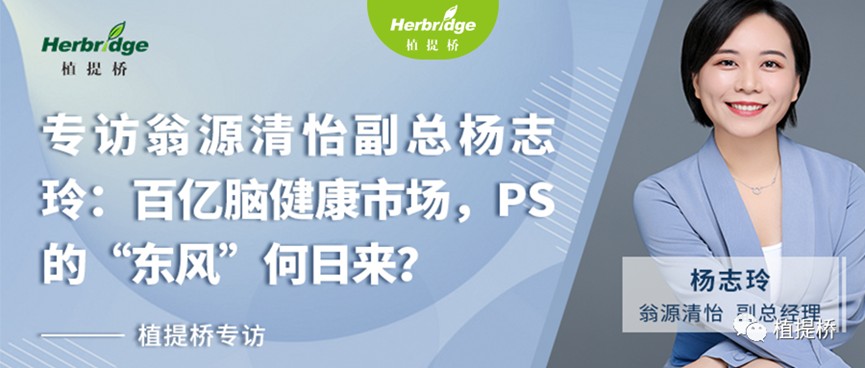
Exclusive Interview with Olivia Yang, Deputy General Manager of L&P Foods: The Hundred-Billion-RMB Brain Health Market — When Will Phosphatidylserine (PS) Reach Its Breakout Moment?
May. 25, 2022
Recently, Nature published a groundbreaking study conducted by a team of 21 scientists from Stanford University’s Department of Neurology and School of Medicine, in collaboration with University of London and other institutions. The researchers identified FGF17, a key factor in cerebrospinal fluid, and demonstrated that injecting cerebrospinal fluid from young mice into the brains of aged mice significantly reversed age-related memory decline and improved cognitive performance in the older mice.
This study is highly encouraging. More importantly, it reflects the persistent determination of humanity to address challenges such as aging and memory decline through continuous scientific exploration.
From the perspective of the functional ingredients market, a wide range of ingredients are positioned in the brain health segment, including PQQ, Ginkgo biloba extract, DHA/PEA, and phosphatidylserine (PS), among others. On October 21, 2010, PS was officially approved as a novel food ingredient by China’s former Ministry of Health of the People's Republic of China under the Announcement on the Approval of Sucrose Polyester, Corn Oligopeptide Powder, Phosphatidylserine, and Other Substances as Novel Food Resources.
Now, more than a decade later, the long-accumulated potential of PS raises an important question: is phosphatidylserine finally poised to reach its long-awaited breakout moment in the Chinese market?
01. A Massive Brain Health Market with Clearly Defined Demand
According to data from Allied Market Research, the global brain health products market was valued at approximately RMB 25 billion in 2017 and is projected to reach RMB 41.5 billion by 2023, representing a compound annual growth rate (CAGR) of 8.8%. The pace of market expansion clearly highlights the strong momentum of this sector.
L&P Foods is a solution provider specializing in nutrition, health, and food safety, with phosphatidylserine (PS) representing one of its key business segments. In the company’s view, the COVID-19 pandemic has prompted many consumers to place greater emphasis on maintaining control over their personal health. Combined with accelerating population aging and increasing daily life stress, the brain health market is expected to continue expanding, with its consumer base extending across all age groups.
On one hand, China has a large and rapidly aging population. Data from the Seventh National Population Census show that in 2020, the population aged 65 and above reached 191 million, further intensifying the degree of aging. Consequently, the market has increasingly focused on the senior segment.
In its 2019 Global Food and Drink Trends: Healthy Aging report, Mintel identified healthy aging as a critical topic in the food and beverage industry. As awareness of age-related neurological conditions such as Alzheimer’s disease continues to grow, an increasing number of middle-aged and elderly consumers are paying closer attention to brain health and actively seeking related products.
On the other hand, demand for brain health products is not limited to older adults. Younger populations are also showing strong interest. According to the 2020 Workplace Stress Report, the average stress level among Chinese professionals reached 6.9 in 2020, marking a peak over the previous two years. The widespread use of terms such as “involution” and “mental burnout” reflects the significant pressure faced by today’s younger generation.
Under conditions of high mental workload and sustained psychological stress, maintaining mental clarity, focus, emotional stability, and stress relief has become a key product consideration for young consumers.
In addition, adolescents require support for memory enhancement, while infants and young children benefit from products that promote brain development and cognitive function. According to the 2019 Online Infant Food Industry Report by Magic Mirror Market Intelligence, DHA and walnut oil products—primarily positioned to support infant brain and neural development—ranked second among infant food subcategories on major e-commerce platforms in June 2019, accounting for 20.11% of market share.
Overall, rising awareness of brain health has been a key driver of global market growth. With ongoing scientific advancements and increasingly robust research validation for functional ingredients, it is reasonable to expect that brain health–focused products—particularly specialized foods—will emerge as a fast-growing segment. As the brain health market is still far from maturity, significant development potential remains, presenting substantial opportunities for companies such as L&P Foods.
However, as previously noted, a wide range of brain health–friendly ingredients are already available. What, then, makes phosphatidylserine (PS) particularly worthy of attention and long-term expectations?
02. Phosphatidylserine (PS): A Natural, Evidence-Based Solution for Diverse Brain Health Needs
Phosphatidylserine (PS) is a health ingredient known for its role in supporting cognitive function. According to incomplete statistics, there are currently around 30 comparable brain health ingredients available on the market. Representative examples include Ginkgo biloba extract, DHA/EPA, pyrroloquinoline quinone disodium salt (PQQ), and PS. While all of these ingredients are positioned as beneficial for brain health, their mechanisms of action differ, resulting in distinct primary application areas and physiological effects.
In response to these considerations, we interviewed Yang Zhiling, Deputy General Manager of L&P Foods. According to Ms. Yang, PS offers several distinctive advantages, which are outlined below.
1.PS Is a Naturally Occurring Ingredient with an Intrinsic Link to Brain Function
PS is a naturally occurring phospholipid found in the biological membranes of all animals, higher plants, and microorganisms. It is abundantly present in brain neuronal cells and plays a crucial role in maintaining normal neuronal function. Owing to its close association with brain physiology, PS is often referred to as a “nutrient for the brain.”
2. Clearly Targeted Cognitive Improvement
Age-related cognitive decline arises from multiple factors, including:
(1) alterations in lipid composition and content of cell membranes, leading to reduced enzyme activity;
(2) decreased synaptic density and progressive neuronal loss;
(3) diminished capacity for neurotransmitter synthesis and release.
PS addresses these mechanisms in a targeted manner. In response to issue (1), PS helps regulate membrane fluidity, activates membrane-associated enzymes, and supports normal cellular activity. Regarding issue (2), PS contributes to the repair and maintenance of neuronal cells. For issue (3), PS participates in neural signal transmission and promotes the release of neurotransmitters. Through these combined mechanisms, PS supports cognitive function and overall brain health.
3. Stronger Scientific Validation
According to Ms. Yang of L&P Foods, nearly 3,000 scientific publications on PS have been published to date. More than 60 human clinical studies have demonstrated that PS is a fundamental, effective, and safe supplemental ingredient for supporting brain health, particularly in enhancing and restoring cognitive function and memory.
At the same time, additional benefits of PS continue to be explored. Emerging research suggests its potential roles in improving attention in children, alleviating muscle soreness in physically active individuals, and enhancing exercise endurance, further expanding its application scope.
4. Growing Global Recognition
PS has gained increasing recognition worldwide. At present, it is approved for use in multiple countries and regions, including the United States, the European Union, China, Japan, and South Korea, reflecting its broad regulatory acceptance and international credibility.
5. Broad Applicability Across Age Groups
According to Ms. Yang of L&P Foods, PS addresses differentiated brain health needs across various age groups. For children and adolescents, PS supports learning and memory performance; for adults, it is associated with stress management and mental relaxation; and for older populations, it is commonly positioned for cognitive maintenance and preventive brain health support.
Overall, PS demonstrates clear strengths in terms of regulatory acceptance, market awareness, scientific validation, mechanisms of action, and breadth of applicability. On the application side, PS is also reaching an increasingly diverse and broader consumer base.
At present, applications of PS in the Chinese market are primarily concentrated in two segments: dietary supplements and conventional foods. In the dietary supplement category, PS is most commonly formulated into softgel capsules, hard capsules, gummies, as well as powders and tablets. In the conventional food segment, an increasing number of dairy companies have begun incorporating PS into senior milk powder, children’s milk powder, and children’s milk products. Representative brands include Xibeigao, Peizhi, and Junlebao.
In addition, gummy-based products, known for their convenience and consumer appeal, have also gained strong market acceptance, further expanding PS applications toward a wider user base.
Ultimately, one of the key factors determining whether PS can truly “take off” lies in the development of clearly differentiated solutions.
03. L&P Foods: Building Differentiated Solutions
According to Ms. Yang of L&P Foods, fewer than 10 companies in China are currently engaged in the actual production of PS. Individual production capacities are estimated to range from 10 to 50 metric tons per year, with the total upstream PS production capacity in China not exceeding 200 metric tons. In addition, the raw material sources of PS vary among manufacturers, and can generally be categorized into three main types: soy-derived, sunflower-derived, and marine-derived sources.
Beyond raw material sourcing, PS ingredients also differ in product specifications and functional properties, which to a large extent determine their suitability and performance across different product applications.
Turning to L&P Foods, the company currently operates at a relatively large scale in PS production and is recognized as one of the leading manufacturers in the industry. Its PS ingredients are sourced from soybeans and sunflower seeds, and are available in a broad range of specifications, with concentrations ranging from 20% to 70%, in both powder and liquid forms.
Notably, high-concentration sunflower-derived PS at 70% purity remains scarce in the market, with only a limited number of suppliers capable of offering such products. L&P Foods is among the few companies able to reliably supply this specification to customers, providing a clear competitive advantage in high-end PS applications.

“We offer products specifically designed for water-based systems, with excellent water dispersibility and stability, delivering outstanding performance in dairy beverages and functional drinks—capabilities that many suppliers and products currently on the market are unable to achieve. Another representative case involves a customized PS solution developed for softgel capsules, which has also demonstrated excellent stability,” Ms. Yang explained.
Beyond its continuous strengths in production capacity, specifications, product forms, functional performance, and application versatility, L&P Foods is further advancing its efforts through deeper and more multidimensional exploration, reinforcing its long-term differentiation strategy in the PS market.
On the product side, the company has established its own biotechnology research institute and, by integrating resources from industry, academia, and research, continues to strengthen product optimization and improvement.
On the market side, guided by a customer-centric approach, the company reinforces its capabilities in formulation design and application-level technical support, delivering comprehensive solutions to meet diverse customer needs.
On the infrastructure and technology side, the company has established a postdoctoral research workstation within its biotechnology research institute. It brings together more than 50 professional engineers, is equipped with advanced, state-of-the-art instrumentation, and operates over a 3,000 m² experimental facility. The company holds 65 invention patents and has also built close collaborative partnerships with multiple universities and overseas research institutions, further strengthening its innovation capabilities.
Looking ahead, Ms. Yang stated that the company will continue to tailor its approach to diverse customer needs. By strengthening efforts in product technology R&D, application development, and manufacturing processes, L&P Foods aims to support customers through pilot-scale trials and the refinement of integrated, end-to-end solutions. At the same time, the company plans to leverage mainstream platforms and diversified communication channels to continuously enhance product visibility and market outreach.
Reference source:
[1]夏洪志. 基于斑马鱼模型评价磷脂酰丝氨酸对记忆力及认知力的改善作用[J].中国食品添加剂,2024,35(02):145-152.DOI:10.19804/j.issn1006-2513.2024.2.018.
[2]Veronika V ,Tzafra C ,Yael R , et al. Phosphatidylserine containing omega-3 fatty acids may improve memory abilities in non-demented elderly with memory complaints: a double-blind placebo-controlled trial.[J].Dementia and geriatric cognitive disorders,2010,29(5):467-74.DOI:10.1159/000310330.
Latest Blogs
-
Sep. 21, 2026
【Food Antioxidants Series 6】 A Key Player in Lipid Preservation | Propyl Gallate (PG)
-
Sep. 21, 2026
[Exhibition Review] L&P Foods Showcases Diverse Ingredient Solutions at Fi Asia Indonesia 2026
-
Sep. 18, 2026
【Food Antioxidants Series 5】 A New Force in Natural Antioxidants | Marigold Flavonoids
-
Sep. 18, 2026
-
Sep. 15, 2026
How TBHQ Extends Shelf Life in Oils and Snacks: Mechanism and Usage Tips