

【Brain Health Ingredient Series 3】Gamma-Aminobutyric Acid (GABA): The Natural Neurotransmitter That Helps the Brain De-Stress
Apr. 10, 2026
- What is Gamma-Aminobutyric Acid (GABA)?
Gamma-aminobutyric acid (GABA) is a naturally occurring non-protein amino acid and the most abundant inhibitory neurotransmitter in the mammalian central nervous system. About 30% of synapses use it to transmit signals, making it the key regulator of the brain’s balance between excitation and inhibition [4]. It is synthesized by neurons in the brain from glutamic acid and is also widely found in plants and animals. In plants, GABA exists in legumes, ginseng species, and some herbal seeds and rhizomes, as well as in foods such as natto and brown rice; in animals, it is almost exclusively present in nervous tissue.
2. Basic Characteristics
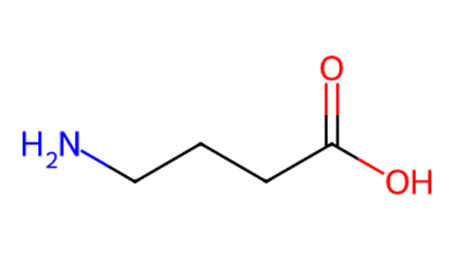
GABA appears as white flaky or needle-like crystals with a faint odor and hygroscopicity. It is highly soluble in water, slightly soluble in hot ethanol, and insoluble in cold ethanol, ether, or benzene. As a small water-soluble molecule, GABA can be rapidly absorbed through the intestinal tract after oral intake and cross the blood–brain barrier to act directly on neurons. It acts selectively—targeting only overexcited neurons without suppressing normal neural activity [5], thereby avoiding side effects such as drowsiness or sluggishness, making it suitable for daily brain regulation. Common production methods include chemical synthesis and biosynthesis [8].
3. Functional Benefits: From Anti-Anxiety to Sleep Support
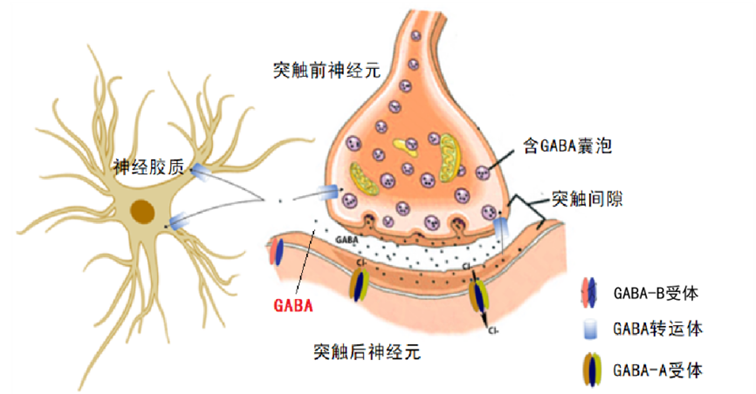
(Image source: Qianbei Youth)
• Inhibits excessive neuronal excitation to maintain brain balance:
GABA reduces neuronal excitability and prevents overstimulation in the central nervous system. When anxiety occurs due to stress-induced overfiring, GABA binds to GABA-A receptors, promotes chloride ion influx [6], hyperpolarizes neurons, and thus reduces anxiety signals. It also inhibits excitatory neurotransmitters such as glutamate, achieving a balanced brain state of ‘calm but not sedated, relaxed but not drowsy,’ while suppressing overactivity in the amygdala and reducing sympathetic nerve activity [12].
• Reduces neural excitability to promote restful sleep and regulate circadian rhythm:
GABA, the brain’s primary inhibitory neurotransmitter, helps calm overactive neurons and ease excessive excitation [2]. It promotes faster sleep onset, reduces nighttime awakenings, and extends deep sleep—without dependency or next-day grogginess.
• Improves focus and emotional stability by reducing excitatory stress:
As a key modulator of neural balance, GABA regulates brain excitability to reduce distractibility and emotional fluctuations [3]. It may also improve cognition by maintaining neurotransmitter balance in the prefrontal cortex. Furthermore, GABA participates in the tricarboxylic acid (TCA) cycle within the brain, enhancing glucose phosphatase [8] activity and acetylcholine synthesis, while promoting cerebral blood flow and lowering blood ammonia levels—thereby supporting neuronal metabolism and functional recovery [10].
4. Regulatory Status: A Globally Recognized Safe Ingredient
• Japan: GABA was listed as a food additive in 1994 and approved in 2001 for use in functional foods with claims such as stress relief and sleep improvement.
• United States: GRAS status was granted in 2007, allowing use in beverages, candies, and dietary supplements with no daily intake limit.
• China: In 2009 (Announcement No. 12), the National Health Commission approved GABA as a “New Food Resource”, limited to beverages, pastries, and dairy products, with a recommended intake of ≤500 mg/day.
• European Union: EFSA’s 2011 safety evaluation confirmed GABA as a permitted dietary supplement ingredient with recognized benefits for nervous system regulation.
5. Clinical Research Support: Proven Anti-Stress and Sleep Benefits
• A 2006 study published in the Journal of Nutritional Science and Vitaminology (NSV) reported that, in 13 healthy adults, a single 100 mg dose of GABA reduced sympathetic nervous activity by 20%—as measured by heart rate variability (HRV)—and decreased anxiety scale scores by 18%. The effects appeared within 30 minutes after ingestion.
• In a double-blind trial involving adults over 40 years old [14], GABA supplementation was found to help maintain attention and mental focus. It also appeared to enhance reasoning ability and the comprehension of visual and abstract information. Evidence suggests that GABA may optimize logical thinking and support both short-term and long-term memory.
• A 2020 study published in Nutrients further confirmed that GABA can mitigate cognitive decline caused by high stress. Participants who consumed GABA showed a 22% reduction in error rates during attention tests, indicating improved cognitive performance under stress [11].
6. Safety Profile: Long-Term Use without Dependence or Adverse Effects
• Acute toxicity tests showed that even a single oral dose of 5,000 mg of GABA—ten times higher than the recommended amount—did not produce any adverse effects such as nausea or dizziness [9].
• Long-term safety studies (500 mg daily for 6 months) demonstrated no abnormalities in liver, kidney, or neurological function. No withdrawal or “rebound” symptoms (e.g., worsening insomnia) were observed, indicating the absence of drug dependence.
• Special populations — including pregnant or lactating women and adolescents — showed no safety concerns when GABA was consumed within recommended dosages; however, use is advised under medical supervision.
• LD₅₀ (rat, intraperitoneal): 5,400 mg/kg [9].
7. Recommended Intake
• For daily stress relief or focus improvement: 100–200 mg/day, divided into two doses (e.g., after breakfast and before afternoon work); may be combined with L-theanine for synergistic relaxation.
• For sleep improvement: 200–500 mg/day, taken 30–60 minutes before bedtime; may be combined with magnesium to enhance GABA receptor activity.
• EU limit: ≤550 mg/day.
• China limit: ≤500 mg/day.
8. Precautions
• Although non-addictive, prolonged excessive intake (>1000 mg/day) may cause mild dizziness or fatigue due to excessive neural inhibition.
• Choose products with ≥98% purity and avoid formulations high in sugar or flavorings.
• If insomnia or anxiety persists for more than two weeks, or if accompanied by depression or headaches, seek medical evaluation rather than relying solely on GABA.
• Children (<12 years old) are not recommended to take regular supplements because their nervous systems are not yet fully developed. They must be used under the guidance of a doctor.
• If mild drowsiness occurs after intake, avoid driving or operating precision instruments; consider adjusting intake timing (e.g., before sleep).
References:
[1]林友益,欧阳玉洁,李泰标,等. 电针不同留针时间对脑外伤昏迷大鼠前额叶皮质GABAb受体表达的影响[J/OL].中医药信息,1-6[2025-10-08].https://link.cnki.net/urlid/23.1194.R.20250930.0859.006.
[2]霍超,敬晓冬,王怡宁,等. 外源γ-氨基丁酸对PCPA诱导焦虑失眠小鼠脑内Glu/GABA平衡的影响分析[J/OL].天津科技大学学报,1-8[2025-10-08].https://doi.org/10.13364/j.issn.1672-6510.20240256.
[3]彭寿宁,邓维聪,符燕波,等. 抑郁障碍与双相障碍抑郁发作患者躯体化症状及血清甲状腺激素、GABA、BDNF水平变化及意义[J].精神医学杂志,2023,36(06):633-637.DOI:CNKI:SUN:SDJB.0.2023-06-014.
[4]Laura V ,Luc P ,Adrien J , et al. Early rise of glutamate-GLUTAMINE levels in mild cognitive impairment: evidence for emerging excitotoxicity.[J].Journal of neuroradiology = Journal de neuroradiologie,2023,51(2):168-175.DOI:10.1016/J.NEURAD.2023.09.003.
[5]L. G S ,F. K H . Brain concentrations of glutamate and GABA in human epilepsy: A review[J].Seizure: European Journal of Epilepsy,2021,91213-227.DOI:10.1016/J.SEIZURE.2021.06.028.
[6]Th A H ,O Y L ,K C C , et al. A case of refractory seizure with cognitive impairment due to anti-GABA encephalitis.[J].Hong Kong medical journal = Xianggang yi xue za zhi,2016,22(5):509-11.DOI:10.12809/hkmj154604.
[7]Wuhyun K ,Hankyul K ,Eunji C , et al. GABA tone regulation and its cognitive functions in the brain.[J].Nature reviews. Neuroscience,2023,24(9):523-539.DOI:10.1038/S41583-023-00724-7.
[8]Zhou H ,Chen H ,Bao D , et al. Recent advances of γ-aminobutyric acid: Physiological and immunity function, enrichment, and metabolic pathway[J].Frontiers in Nutrition,2022,DOI:10.3389/FNUT.2022.1076223.
[9]A. H O ,F. E M ,L. A R , et al. United States Pharmacopeia (USP) Safety Review of Gamma-Aminobutyric Acid (GABA)[J].Nutrients,2021,13(8):2742-2742.DOI:10.3390/NU13082742.
[10]J. D M . The Aging GABAergic System and Its Nutritional Support[J].Journal of Nutrition and Metabolism,2021,20216655064-6655064.DOI:10.1155/2021/6655064.
[11]Piril H ,A. J G ,Jun N , et al. Effects of Oral Gamma-Aminobutyric Acid (GABA) Administration on Stress and Sleep in Humans: A Systematic Review.[J].Frontiers in neuroscience,2020,14923-923.DOI:10.3389/fnins.2020.00923.
[12]EBoonstra E ,Kleijn E R ,Colzato S L , et al. Neurotransmitters as food supplements: the effects of GABA on brain and behavior[J].Frontiers in Psychology,2015,61520.DOI:10.3389/fpsyg.2015.01520.
[13]Fujibayashi M, Kamiya T, Takagaki K, Moritani T. Activation of autonomic nervous system activity by the oral ingestion of GABA. J Jpn Soc Nutr Food Sci 2008:61:129-133.
[14]Yamatsu A, Nakamura U, Saddam HM, et al. Intake of 200 mg / day of gamma-aminobutyric acid (GABA) improves a wide range of cognitive functions. Jpn Pharmacol Ther 2020;48 (3):461‐474.
Latest Blogs
-
Sep. 21, 2026
【Food Antioxidants Series 6】 A Key Player in Lipid Preservation | Propyl Gallate (PG)
-
Sep. 21, 2026
[Exhibition Review] L&P Foods Showcases Diverse Ingredient Solutions at Fi Asia Indonesia 2026
-
Sep. 18, 2026
【Food Antioxidants Series 5】 A New Force in Natural Antioxidants | Marigold Flavonoids
-
Sep. 18, 2026
-
Sep. 15, 2026
How TBHQ Extends Shelf Life in Oils and Snacks: Mechanism and Usage Tips