

【Brain Health Ingredient Series 8】 Ginkgo Biloba Extract (GBE): A Natural Active Ingredient for Improving Cerebral Circulation
May. 11, 2026
1. What Is Ginkgo Biloba Extract?
Image Source: Pixabay
Ginkgo Biloba Extract (GBE) is a mixture of bioactive compounds extracted and purified from the dried leaves of Ginkgo biloba. Its principal active components are flavone glycosides and terpene lactones [1]. Among them, Ginkgolide B has been widely studied for its role in improving neurodegenerative disorders. As a “living fossil” plant that has survived for more than 200 million years, Ginkgo biloba has a long history of medicinal use. Modern research confirms that GBE is a high-value natural ingredient for improving cerebral blood circulation and supporting brain function.
-
Basic Characteristics
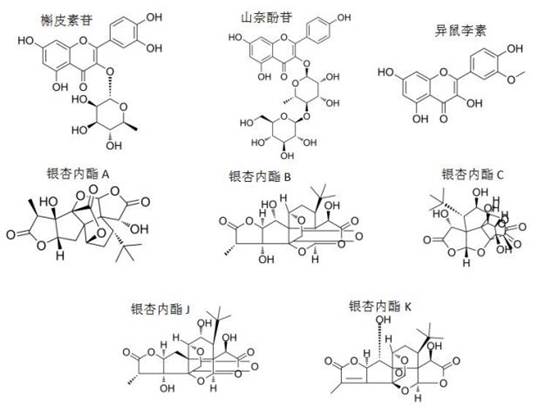
Image Source: MedChemExpress
Ginkgo Biloba Extract is a light yellow-brown free-flowing powder with a characteristic aroma and a slightly bitter taste. It is chemically stable. The flavone glycosides are water-soluble, while the terpene lactones are lipophilic. This dual nature enables efficient intestinal absorption (approximately 60–70%) and allows active compounds to cross the blood-brain barrier and act directly on cerebral blood vessels and neurons. According to the WHO monograph on medicinal plants, standardised GBE contains 22–27% flavone glycosides and 5–7% terpene lactones, with ginkgolic acids limited to less than 5 mg/kg [4].
• Flavone Glycosides (~24%): Including quercetin, kaempferol, and isorhamnetin derivatives. These are potent antioxidants that scavenge free radicals and protect cells from oxidative damage.
• Terpene Lactones (~6%): Primarily ginkgolides and bilobalide. These unique compounds play a critical role in improving blood circulation, especially microcirculation, and in providing neuroprotection.
3. Functional Benefits: From Improving Cerebral Circulation to Cognitive Protection
Improves Cerebral Blood Circulation: The terpene lactones in Ginkgo Biloba Extract (GBE) inhibit platelet-activating factor (PAF) [2], dilate cerebral blood vessels, reduce blood viscosity, and increase cerebral blood flow [5], particularly in key cognitive regions such as the hippocampus and prefrontal cortex. This helps relieve dizziness and memory decline associated with insufficient cerebral perfusion [6], enhances neural transmission speed, and accelerates information processing in the brain.
Protects Neurons from Damage: Flavone glycosides scavenge free radicals, inhibit lipid peroxidation and the release of inflammatory mediators [7,13], thereby reducing oxidative damage to nerve cells. In addition, Ginkgolide B can cross the blood-brain barrier [3] and protect neurons against β-amyloid toxicity [12,19]. Together, these active components contribute to the prevention and mitigation of neurodegenerative disorders.
Enhances Cognitive Function and Memory: By improving cerebral blood flow and protecting neurons, quercetin glycosides and kaempferol glycosides in GBE can significantly increase levels of dopamine and acetylcholine in the brain [9,11], helping to enhance the efficiency of neurotransmission [20]. As a result, GBE may improve attention deficits and difficulties in memory retrieval, ultimately supporting overall cognitive performance.
4. Regulatory Status: A Globally Recognised Natural Medicinal Ingredient
European Union: Ginkgo Biloba Extract (GBE) is primarily regulated as an herbal medicinal product. The European Pharmacopoeia (EP) specifies that the total ginkgolic acid content must not exceed 5 ppm.
United States: GBE has not received FDA GRAS (Generally Recognised as Safe) status and is used mainly as a dietary supplement. The United States Pharmacopoeia (USP) establishes strict quality standards for GBE, including a maximum ginkgolic acid content of 5 ppm.
China: GBE is included in the 2015 edition of the Chinese Pharmacopoeia and is permitted for use in pharmaceuticals and health foods. The Pharmacopoeia specifies that the total ginkgolic acid content must be less than 10 ppm.
Japan and South Korea: In Japan, GBE is primarily regulated as a dietary supplement and herbal product. In South Korea, the Ministry of Food and Drug Safety (MFDS) has established specific requirements for the ratio of key flavonoid components, with the ratio of quercetin to kaempferol set at 1:0.8–1.2. Both countries require that the ginkgolic acid content not exceed 5 ppm.
5. Clinical Evidence Supporting Brain Health Benefits
Yu et al. [17] reported that GBE50 restores the integrity of the neurovascular unit (NVU) and improves cerebrovascular function through multi-target mechanisms, thereby alleviating cognitive impairment associated with Alzheimer’s disease (AD). These findings highlight its therapeutic potential in AD and other neurodegenerative disorders related to cerebrovascular dysfunction.
In a multicenter, randomised, placebo-controlled trial involving 404 patients with Alzheimer’s disease or vascular dementia [8], participants were randomly assigned to receive either standardised Ginkgo Biloba Extract or placebo for 24 weeks. The results showed that 33% of patients in the treatment group achieved a significant reduction in total SKT cognitive test scores, while 43% experienced a significant decrease in total Neuropsychiatric Inventory (NPI) scores, demonstrating substantial improvements in both cognitive performance and neuropsychiatric symptoms.
Studies using the Morris water maze and radioimmunoassay [16] found that Ginkgo Biloba Extract (EGB) significantly improved spatial learning ability in Alzheimer’s disease (AD) rat models and increased acetylcholine release. Long-term oral administration of EGB also enhanced short-term learning and memory in aged rats.
6. Safety
A meta-analysis encompassing four randomised controlled trials (RCTs) involving 782 patients with mild dementia [18] found that the incidence of adverse events in the Ginkgo Biloba Extract group was not significantly different from that in the placebo group (p = 0.66). Reported adverse effects were generally mild and primarily included gastrointestinal symptoms, such as diarrhoea and abdominal pain, as well as headache. No serious allergic reactions were reported.
A long-term safety study (240 mg/day for 5 years) [15] demonstrated no clinically significant abnormalities in liver function, kidney function, coagulation parameters, or other key safety indicators, and no evidence of drug dependence was observed.
7. Recommended Daily Intake
• Germany: 240 mg/day.
• United States: 120–240 mg/day.
• WHO and EMA: 120–240 mg/day using standardised extracts (≥24% flavone glycosides and ≥6% terpene lactones).
• China: 120–240 mg/day (standardised extract basis).
• Japan Health and Nutrition Food Association: 60–240 mg/day for adults.
8. Precautions
Choose only standardised Ginkgo Biloba Extract (GBE) with a ginkgolic acid content of less than 5 ppm. Unrefined Ginkgo leaf powder and low-quality extracts should be avoided, as ginkgolic acids are cytotoxic and excessive intake may cause liver damage.
Use with caution in certain populations. Individuals taking other medications, patients with diabetes, and those with sensitive digestive systems should consult a physician before supplementation.
Contraindications: GBE should not be used by individuals who are allergic to Ginkgo, have bleeding disorders, are taking anticoagulant or antiplatelet medications, have a history of epilepsy, or are pregnant or breastfeeding.
Not a substitute for medication: For individuals diagnosed with cognitive impairment (such as Alzheimer’s disease) or cerebrovascular disorders (such as cerebral infarction), GBE should be used only as an adjunct nutritional supplement and should not replace prescribed medical treatment.
Avoid excessively prolonged continuous use. Although long-term use is generally considered safe, it is advisable to discontinue supplementation for 1–2 months after every 12 months of continuous use to minimise any potential risk of accumulation.
References
[1]Sun J ,Zheng Z . The active ingredient of Ginkgo biloba extract (quercetin) improved H2O2-induced microglia injury by activating NQO1-PI3K/Akt/mTOR signaling[J].In Vitro Cellular & Developmental Biology - Animal,2025,(prepublish):1-14.DOI:10.1007/S11626-025-01106-2.
[2]Liu H ,Lei W ,Ren Y , et al. Protective effects of Ginkgolide B on myocardial ischemia reperfusion injury: role of the GAS6/Axl signaling pathway.[J].Chemico-biological interactions,2025,418111607.DOI:10.1016/J.CBI.2025.111607.
[3]王柯,戎装,李海燕,等. 银杏叶提取物对脑小血管病认知功能障碍的干预机制研究进展[J].上海中医药大学学报,2025,39(02):82-91.DOI:10.16306/j.1008-861x.2025.02.011.
[4]苏腾伟,曾健,谢园,等. 银杏叶有效成分提取工艺研究进展综述[J].山东化工,2025,54(06):130-132.DOI:10.19319/j.cnki.issn.1008-021x.2025.06.061.
[5]Yu T ,Wei Z ,Wang J , et al. Ginkgo biloba Extract GBE50 ameliorates cerebrovascular dysfunction and cognitive impairment in a mouse model of Alzheimer's disease.[J].Phytomedicine : international journal of phytotherapy and phytopharmacology,2025,141156646.DOI:10.1016/J.PHYMED.2025.156646.
[6]Adebayo G O ,Azu B B ,Aduema W , et al. Ginkgolide B as a biopsychosocial treatment salvages repeated restraint stress-induced amygdalar anomalies in mice[J].IBRO Neuroscience Reports,2025,1866-77.DOI:10.1016/J.IBNEUR.2024.12.010.
[7]Lee W C ,Wang H Y B ,Wong H S , et al. Ginkgolide B increases healthspan and lifespan of female mice[J].Nature Aging,2025,5(2):1-22.DOI:10.1038/S43587-024-00802-0.
[8]Chen S ,Tan S ,Hou W , et al. Efficacy and safety of standardized Ginkgo biloba extract as adjuvant therapy for intracerebral hemorrhage in China: A systematic review and meta-analysis[J].Heliyon,2024,10(5):e26861-.DOI:10.1016/J.HELIYON.2024.E26861.
[9]Gamo G S ,Enea T ,Francesco A . Activity of Choline Alphoscerate on Adult-Onset Cognitive Dysfunctions: A Systematic Review and Meta-Analysis.[J].Journal of Alzheimer's disease : JAD,2023,92(1):59-70.DOI:10.3233/JAD-221189.
[10]Liming X ,Qi Z ,Jiahong L . Can We Use Ginkgo biloba Extract to Treat Alzheimer’s Disease? Lessons from Preclinical and Clinical Studies[J].Cells,2022,11(3):479-479.DOI:10.3390/CELLS11030479.
[11]Li S ,Chen D ,Deqin G , et al. Ginkgolide B inactivates the NLRP3 inflammasome by promoting autophagic degradation to improve learning and memory impairment in Alzheimer’s disease[J].Metabolic Brain Disease,2022,37(2):329-341.DOI:10.1007/S11011-021-00886-2.
[12]Yidan Z ,Yuan Z ,Jian Z , et al. Ginkgolide B Inhibits NLRP3 Inflammasome Activation and Promotes Microglial M2 Polarization in Aβ1-42-induced microglia cells.[J].Neuroscience letters,2021,764136206-136206.DOI:10.1016/J.NEULET.2021.136206.
[13]Li S ,Chen D ,Deqin G , et al. Ginkgolide B protects against cognitive impairment in senescence-accelerated P8 mice by mitigating oxidative stress, inflammation and ferroptosis.[J].Biochemical and biophysical research communications,2021,57217-14.DOI:10.1016/J.BBRC.2021.07.081.
[14]Abdullah S ,Bich T D T ,Thi H P , et al. Herbal Medicine for Cardiovascular Diseases: Efficacy, Mechanisms, and Safety.[J].Frontiers in pharmacology,2020,11422.DOI:10.3389/fphar.2020.00422.
[15] Life Science Research - Chemical Toxicology; Data on Chemical Toxicology Described by Researchers at National Institute of Environmental Health Sciences (Systemic exposure to Ginkgo biloba extract in male F344/NCrl rats: Relevance to humans)[J].Politics & Government Week,2019,
[16]Yiran C ,Hongwei W ,Mengting L , et al. Effect of Ginkgo biloba leaf extract on cerebral cortex amino acid levels in cerebral ischemia model rats[J].Journal of Traditional Chinese Medicine,2018,38(5):676-684.DOI:10.1016/S0254-6272(18)30906-3.
[17] Correction: Ginkgo biloba extract improved cognitive and neurological functions of acute ischaemic stroke: a randomised controlled trial .[J].Stroke and vascular neurology,2018,3(3):189.DOI:10.1136/svn-2017-000104corr1.
[18]刘丹,王佳贺. 银杏叶提取物防治阿尔茨海默病的研究进展[J].实用老年医学,2017,31(07):609-612.DOI:CNKI:SUN:SYLA.0.2017-07-004.
[19]朱尚峰,金跃春. 银杏叶提取物对脑组织及脑神经细胞活性的保护作用[J].中国临床康复,2006,(23):146-148.DOI:CNKI:SUN:XDKF.0.2006-23-053.
[20]李源莉,陈建宗. 银杏叶提取物防治阿尔茨海默病的研究进展[J].国际中医中药杂志,2006,(03):148-150.DOI:CNKI:SUN:GWZY.0.2006-03-007.
Latest Blogs
-
Sep. 21, 2026
【Food Antioxidants Series 6】 A Key Player in Lipid Preservation | Propyl Gallate (PG)
-
Sep. 21, 2026
[Exhibition Review] L&P Foods Showcases Diverse Ingredient Solutions at Fi Asia Indonesia 2026
-
Sep. 18, 2026
【Food Antioxidants Series 5】 A New Force in Natural Antioxidants | Marigold Flavonoids
-
Sep. 18, 2026
-
Sep. 15, 2026
How TBHQ Extends Shelf Life in Oils and Snacks: Mechanism and Usage Tips