

【Brain Health Ingredient Series 2】 Pyrroloquinoline Quinone (PQQ): The "Energy Activator" Protecting Neuronal Cells
Mar. 31, 2026
1. What is Pyrroloquinoline Quinone (PQQ)?
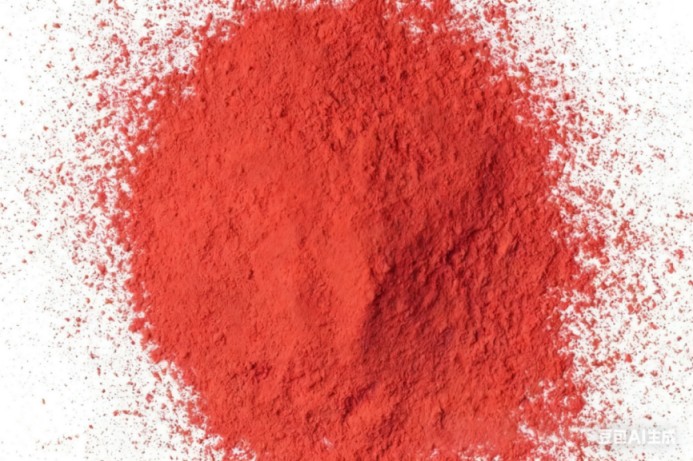
Image source: AI-generated
PQQ was discovered in the late 1960s. It is a non-vitamin, water-soluble redox coenzyme (methanol dehydrogenase) [8] — the third cofactor identified in membrane-bound bacterial dehydrogenases, following flavin nucleotides and nicotinamide nucleotides [12,17]. PQQ is widely present in soil, breast milk, and common foods such as spinach and broccoli, and trace amounts can also be synthesized in the human body [13]. Although it is not a vitamin, due to its coenzyme-like essential role, it is often referred to as the “14th vitamin” and is recognized as a “next-generation key ingredient for brain health.”
2. Basic Characteristics
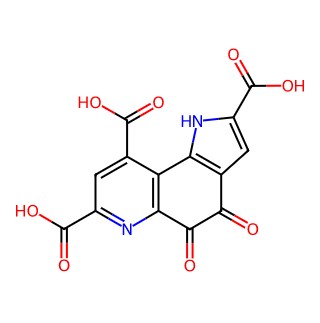
Image source: ChemSpider
PQQ itself has poor water solubility and is chemically active, making it prone to reduction and degradation. However, its sodium salt form (PQQ disodium salt) exhibits significantly improved water solubility, stability, and bioavailability. PQQ disodium salt is a reddish-brown aromatic orthoquinone compound that dissolves easily in water [15], is thermally stable, and emits a distinctive green fluorescence. Under weakly acidic to neutral conditions, it dissociates into anions and can form adducts with water, alcohols, and amines. PQQ can be produced through chemical synthesis and microbial fermentation methods.
3. Functional Effects: From Neuroprotection to Cognitive Enhancement
Unlike single-function ingredients, PQQ exerts multi-dimensional protection over brain health.
(1) Regulating Neurotrophic Factors and Promoting Neurogenesis
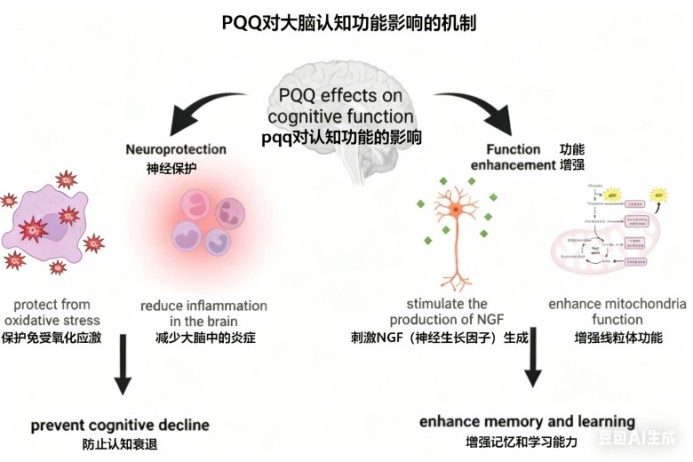
Image source: 《The effects of pyrroloquinoline quinone disodium salt on brain function and physiological processes》
Neurotrophic factors (such as BDNF and NGF) are essential nutrients for the brain[9]. PQQ is one of the few known compounds capable of activating BDNF, stimulating the hippocampus to generate new, mature neurons [10,11]. By increasing the “hardware” of the brain, PQQ strengthens the physiological foundation of memory and cognition[4].
(2) Boosts Mitochondrial Energy and Cellular Vitality
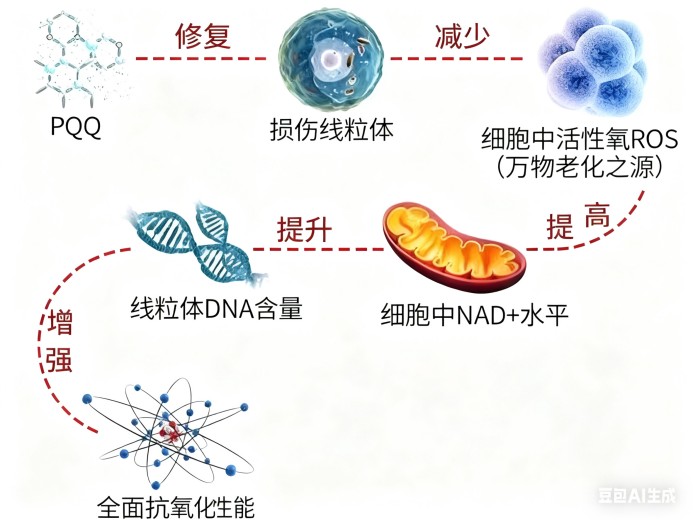
Image source:《Pyrroloquinoline-quinone to reduce fat accumulation and ameliorate obesity progression》
Mitochondrial dysfunction leads to insufficient ATP and excessive free radical release, accelerating cell death [2]. PQQ activates key pathways such as PGC-1α to promote mitochondrial biogenesis and energy metabolism [20], thereby protecting nerve cells and alleviating brain fatigue [7].
(3) Inhibiting Oxidation and Inflammation to Protect Nerve Cells
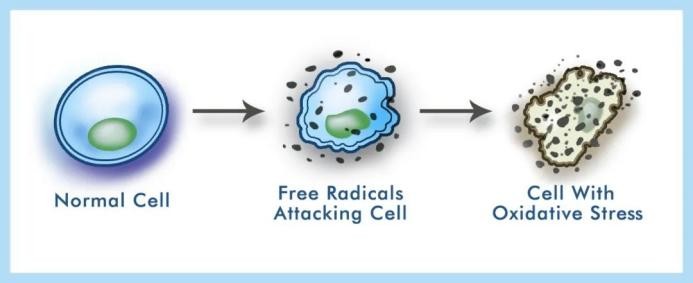
Image source: www.medicaldetectivemd.com
PQQ can directly scavenge free radicals and interrupt oxidative stress, reducing damage to neuronal membranes [3]. It also inhibits the release of inflammatory cytokines such as TNF-α and IL-6 [16,20], effectively building a protective barrier for the brain and lowering the risk of neurodegeneration.
4. Regulatory Status: A Globally Recognized Safe Ingredient
● Canada: In 2012, Health Canada (HC) approved PQQ as a natural health product.
● Japan: In 2013, the Ministry of Health, Labour and Welfare (MHLW) of Japan approved PQQ as a non-pharmaceutical ingredient and included it in the “List of Functional Food Ingredients,” allowing claims that it “supports brain health.”
● United States: In 2016, the U.S. Food and Drug Administration (FDA) granted PQQ GRAS (Generally Recognized As Safe) status, permitting its use in foods and dietary supplements without setting a maximum daily intake limit.
● European Union: In 2018, the European Food Safety Authority (EFSA) approved PQQ as a novel food ingredient for use in dietary supplements for adults (excluding pregnant and breastfeeding women) at a limit of 20 mg/day.
● China: In March 2022, the National Health Commission (NHC) approved chemically synthesized PQQ as a new food ingredient [21] for use in populations other than infants, pregnant, or breastfeeding women, with a daily intake limit of ≤20 mg. It may also be used in beverages. In October 2023, the NHC approved fermented PQQ as a new food ingredient. Currently, PQQ is only approved in solid or beverage forms (not capsules or tablets).
5. Clinical Evidence: Proven Benefits for Brain Health and Function
●A study published in 《NPJ Aging》 confirmed that PQQ can restore mitochondrial morphological damage caused by hydrogen peroxide exposure, improving mitochondrial dynamics and thereby delaying cellular aging[1,6].
● A randomized controlled trial published in 《Food & Function》 showed that daily supplementation with 20 mg of PQQ for 12 weeks significantly enhanced composite and verbal memory in all participants, particularly among older adults; even after 8 weeks, younger participants demonstrated improved cognitive flexibility, processing speed, and executive performance [14].
● A Japanese study involving healthy adults aged 40–80 found that daily supplementation with 21.5 mg of PQQ disodium salt for 12 weeks significantly improved composite memory and reaction time scores across seven cognitive function tests compared with the placebo group, with improvements observable as early as week six[18].
6. Safety Profile: Demonstrated Long-Term Tolerability and Safety
Numerous clinical studies and practical applications indicate that PQQ is highly safe.
● Mutagenicity and Genotoxicity: PQQ has shown no genetic or cytotoxic effects at doses up to 5000 μg and does not induce mutations dependent on metabolic activation systems, meeting genetic toxicology safety standards[19].
● Acute Toxicity: Studies in rats and mice have shown that the median lethal dose (LD₅₀) of PQQ exceeds 5000 mg/kg body weight. According to the Globally Harmonized System (GHS), PQQ is not classified under acute toxicity categories, indicating very low risk even at high single doses[22].
● Subchronic Toxicity: No evidence currently suggests that PQQ exhibits subchronic toxicity.
● Teratogenicity: No teratogenic effects have been observed in animal models.
7. Recommended Intake and Dosage
● For Daily Health Maintenance (Healthy Adults): 10–20 mg per day, taken once or divided into two doses.
● For Targeted Cognitive Enhancement (Mental Workers, Middle-aged, and Elderly): 20 mg per day, preferably combined with 300–600 mg Coenzyme Q10 (to synergistically enhance mitochondrial function) or 100 mg Phosphatidylserine (for stronger neuroprotective effects).
8. Precautions
● Not recommended for infants or children under 14 years old (due to limited safety data). Pregnant or breastfeeding women should use under the guidance of a physician or nutritionist.
● While no specific drug interactions have been reported, individuals taking anticoagulants, antidiabetic drugs, or those with severe liver or kidney conditions should consult healthcare professionals before supplementation.
● Product purity matters — high-quality PQQ should have a purity ≥99% to ensure efficacy and minimize digestive burden.
● Some individuals may experience mild insomnia initially (due to increased brain activity); it is recommended to take PQQ after breakfast or lunch, and avoid nighttime intake.
● Not a substitute for medication: individuals with significant cognitive impairment (e.g., severe memory loss or delayed reactions affecting daily life) should seek medical evaluation rather than relying solely on supplements.
References:
[1] Xiao L ,Wang M ,Li J , et al. Pyrroloquinoline Quinone Preconditioning Alleviates Ischemic Cerebral Injury Through Antioxidant and Anti-Inflammatory Mechanisms[J].Journal of Neuroimmune Pharmacology,2025,20(1):75-75.DOI:10.1007/S11481-025-10234-1.
[2] Petricca S ,Matrone A ,Capece D , et al. Pyrroloquinoline Quinone (PQQ) Attenuates Hydrogen Peroxide-Induced Injury Through the Enhancement of Mitochondrial Function in Human Trabecular Meshwork Cells[J].International Journal of Molecular Sciences,2025,26(14):6938-6938.DOI:10.3390/IJMS26146938.
[3] Jiang B ,Zhang H ,Xu Q , et al. Pyrroloquinoline Quinone Is an Effective Senomorphic Agent to Target the Pro-Inflammatory Phenotype of Senescent Cells.[J].Aging cell,2025,24(9):e70138.DOI:10.1111/ACEL.70138.
[4] Xie T ,Zhang Z ,Feng M , et al. Current study on Pyrroloquinoline quinone (PQQ) therapeutic role in neurodegenerative diseases[J].Molecular Biology Reports,2025,52(1):397-397.DOI:10.1007/S11033-025-10491-6.
[5] Yoshiaki S ,Megumi T ,Ryohei T , et al. Effect of Dietary Pyrroloquinoline Quinone Disodium Salt on Cognitive Function in Healthy Volunteers: A Randomized, Double-Blind, Placebo-Controlled, Parallel-Group Study.[J].Journal of the American College of Nutrition,2021,41(8):11-14.DOI:10.1080/07315724.2021.1962770.
[6]Liu X ,Zhang C ,Lv J , et al. Pyrroloquinoline Quinone Reprograms the Single-Cell Landscape of Immune Aging in Hematopoietic Immune System.[J].Aging cell,2025,24(7):e70050.DOI:10.1111/ACEL.70050.
[7]NourD ,MostafaM ,IsmailF , et al. Improving Memory and Cognition by Enhancing Mitochondrial function and Biogenesis[J].Alzheimer's & Dementia,2025,20(S8):e094581-e094581.DOI:10.1002/ALZ.094581.
[8] Winyoo C ,A K B ,Eskouhie T , et al. Pyrroloquinoline quinone stimulates mitochondrial biogenesis through cAMP response element-binding protein phosphorylation and increased PGC-1alpha expression.[J].The Journal of biological chemistry,2010,285(1):142-52.DOI:10.1074/JBC.M109.030130.
[9] R. K J ,Winyoo C ,B. R R . Pyrroloquinoline-Quinone Is More Than an Antioxidant: A Vitamin-like Accessory Factor Important in Health and Disease Prevention[J].Biomolecules,2021,11(10):1441-1441.DOI:10.3390/BIOM11101441.
[10]Charrier D ,Cerullo G ,Carpenito R , et al. Metabolic and Biochemical Effects of Pyrroloquinoline Quinone (PQQ) on Inflammation and Mitochondrial Dysfunction: Potential Health Benefits in Obesity and Future Perspectives.[J].Antioxidants (Basel, Switzerland),2024,13(9):1027-1027.DOI:10.3390/ANTIOX13091027.
[11] Baltic S ,Nedeljkovic D ,Todorovic N , et al. The impact of six-week dihydrogen-pyrroloquinoline quinone supplementation on mitochondrial biomarkers, brain metabolism, and cognition in elderly individuals with mild cognitive impairment: a randomized controlled trial.[J].The journal of nutrition, health & aging,2024,28(8):100287-100287.DOI:10.1016/J.JNHA.2024.100287.
[12] Ikemoto K ,Ishak M S N ,Akagawa M . The effects of pyrroloquinoline quinone disodium salt on brain function and physiological processes.[J].The journal of medical investigation : JMI,2024,71(1.2):23-28.DOI:10.2152/JMI.71.23.
[13] Masanori T ,Tomomi S ,Eiichiro N , et al. Pyrroloquinoline quinone disodium salt improves brain function in both younger and older adults.[J].Food & function,2023,14(5):DOI:10.1039/D2FO01515C.
[14] Syafiqah N I M ,Kazuto I . Pyrroloquinoline-quinone to reduce fat accumulation and ameliorate obesity progression.[J].Frontiers in molecular biosciences,2023,101200025-1200025.DOI:10.3389/FMOLB.2023.1200025.
[15] Ying G ,Teru K ,Chisato F , et al. Pyrroloquinoline quinone (PQQ) protects mitochondrial function of HEI-OC1 cells under premature senescence[J].npj Aging,2022,8(1):3-3.DOI:10.1038/S41514-022-00083-0.
[16]张燕. 新食品原料吡咯并喹啉醌二钠盐改善记忆作用及机制探讨[J].现代食品,2025,(07):108-110+125.DOI:10.16736/j.cnki.cn41-1434/ts.2025.07.026.
[17]卢文婷,唐华民. 新食品原料PQQ对改善记忆效果探讨[J].中外食品工业,2024,(23):26-28.DOI:CNKI:SUN:WSZP.0.2024-23-009.
[18]王凯,王利,伊西才,等. 吡咯喹啉醌对颅脑损伤小鼠的神经保护作用[J].中国临床神经外科杂志,2024,29(08):473-477.DOI:10.13798/j.issn.1009-153X.2024.08.007.
[19]李秀慧. 新食品原料PQQ延缓衰老作用与机制初探[J].现代食品,2023,29(15):189-192.DOI:10.16736/j.cnki.cn41-1434/ts.2023.15.047.
[20]刘华,贺建华. 吡咯喹啉醌的生物学功能及其在动物营养中的应用[J].动物营养学报,2020,32(03):1010-1018.
[21]国家卫生健康委食品安全标准与监测评估司. 关于关山樱花等 32 种“三新食品”的公告[EB/OL].
[22]国家食品安全风险评估中心. 桃胶等4种新食品原料公开征求意见[EB/OL].
Latest Blogs
-
Sep. 21, 2026
【Food Antioxidants Series 6】 A Key Player in Lipid Preservation | Propyl Gallate (PG)
-
Sep. 21, 2026
[Exhibition Review] L&P Foods Showcases Diverse Ingredient Solutions at Fi Asia Indonesia 2026
-
Sep. 18, 2026
【Food Antioxidants Series 5】 A New Force in Natural Antioxidants | Marigold Flavonoids
-
Sep. 18, 2026
-
Sep. 15, 2026
How TBHQ Extends Shelf Life in Oils and Snacks: Mechanism and Usage Tips