

【Food Antioxidants Series 10】 A New Natural Plant Extract Antioxidant | Antioxidants of Bamboo Leaves
Oct. 29, 2026
As the food industry continues to shift toward natural, healthy, and green solutions, demand for natural antioxidants is steadily increasing. Antioxidants of bamboo leaves, as natural polyphenolic antioxidants extracted from bamboo plants, offer the advantages of renewable raw materials, excellent antioxidant activity, high safety, and broad compatibility with various food systems. These characteristics closely meet consumers’ growing demand for natural food additives.
Bamboo is widely distributed in China. Antioxidants of bamboo leaves are produced from the fresh leaves of plants belonging to the Bambusoideae subfamily of the grass family. Their production enables the comprehensive utilization of forestry resources, with raw materials that are readily available and highly sustainable. As a result, they represent a natural food antioxidant with distinctive Chinese characteristics.
I. Antioxidants of Bamboo Leaves (AOB)
Antioxidants of bamboo leaves are natural polyphenolic mixtures obtained from the fresh leaves of plants belonging to the genus Phyllostachys (Sieb. et Zucc.) of the Bambusoideae subfamily of the grass family, such as moso bamboo, henon bamboo, and Phyllostachys species. They are produced through processes including aqueous extraction, ethanol extraction, purification, concentration, and drying. Their major active components include flavonoids, phenolic acids, and coumarins [1]. Among them, orientin, isoorientin, vitexin, and isovitexin are representative antioxidant flavonoids, and total flavonoid content is an important indicator for evaluating antioxidant activity [4].
The mainstream extraction process for antioxidants of bamboo leaves is ethanol-water solvent extraction, combined with processes such as macroporous resin purification and spray drying [7]. This approach helps retain the natural active components in the raw material while improving product purity. Some processes also use ultrasound-assisted or microwave-assisted extraction [10] to improve extraction efficiency and increase the yield of active components.
-
Water-soluble products: The main active components include C-glycosyl flavonoids from bamboo leaves, such as isoorientin, orientin, vitexin, and
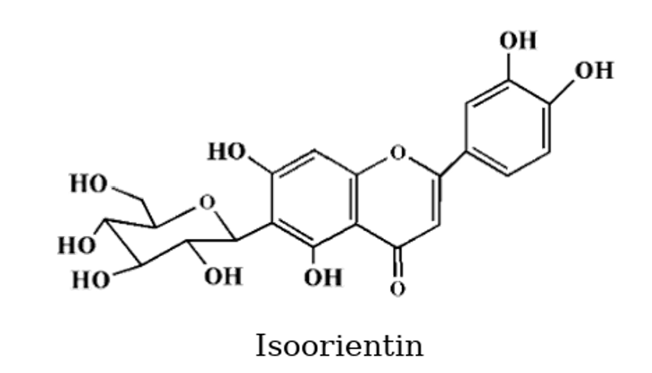
Image Source: GB 30615-2014
Oil-soluble products: The main active components include p-coumaric acid, ferulic acid, tricin, and esterified derivatives of bamboo leaf flavonoids.
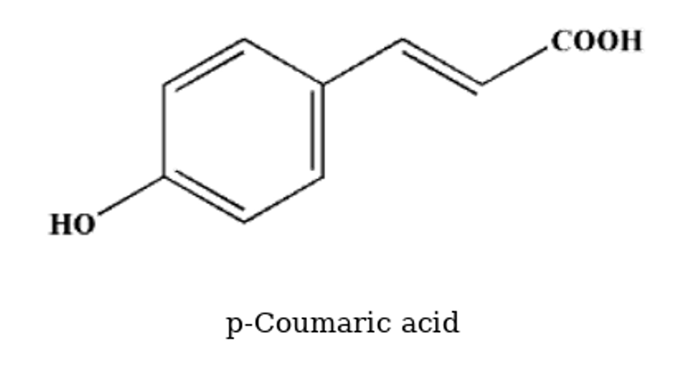
Image Source: GB 30615-2014
II. Basic Properties
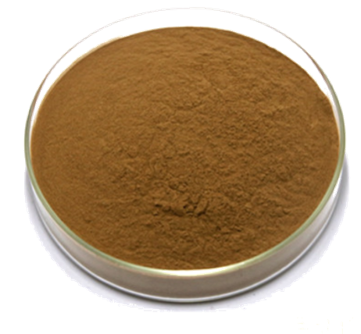
Image Source: Baidu Encyclopedia (Baidu Baike)
1. Physical properties: The pure product is a light yellow to brownish-yellow powder with no noticeable odor. Water-soluble products are readily soluble in water, ethanol, and propylene glycol, while oil-soluble products are readily soluble in vegetable oils, acetone, and other organic solvents. When incorporated into foods, they do not significantly alter the original flavor of the product and have little effect on the color of light-colored foods, making them suitable for a wide range of food-processing applications [2].
2. Antioxidant mechanism: The phenolic hydroxyl groups of the main active components form conjugated systems with the flavonoid skeleton, giving them strong reducing properties. They inhibit lipid peroxidation chain reactions through multiple mechanisms: they donate active hydrogen atoms and rapidly react with peroxyl radicals, alkyl radicals, and other reactive radicals in food systems [5], converting highly reactive radicals into stable products while forming phenoxyl radicals with little tendency to participate in secondary reactions. They can also chelate pro-oxidant metal ions such as iron and copper, reducing their catalytic effects on lipid oxidation [6] and thereby decreasing free-radical generation at its source. In addition, they may activate endogenous antioxidant enzymes in food systems, enhancing the system’s own antioxidant capacity and producing synergistic antioxidant effects [11].
3. Key advantages: The raw materials are renewable bamboo resources that are environmentally friendly and widely available, in line with the concept of comprehensive utilization of forestry resources. Antioxidants of bamboo leaves provide multiple functions, including antioxidant activity, mild antimicrobial activity, and color protection [8], helping to delay food oxidation, inhibit the growth of harmful microorganisms, and prevent undesirable color changes.
4. Stability: Antioxidants of bamboo leaves show excellent stability under acidic and neutral conditions, with a high retention of antioxidant activity. They are resistant to acidic and saline conditions and have good compatibility with commonly used food additives. They do not produce color-forming reactions with metal ions and therefore have no adverse effect on food color. They are also relatively insensitive to light and oxygen, resulting in slower activity loss during storage and convenient storage stability.
5. Other functions: In addition to their antioxidant function in foods, antioxidants of bamboo leaves have also been reported to possess physiological effects such as anti-inflammatory activity [3], lipid-lowering effects, and antimicrobial activity [9]. Small amounts added to foods may help enhance the natural functional properties of the product. They also have broad application potential in health products, cosmetics, feed additives, and other fields.
III. Widely Recognized in China and Abroad, a Distinctive Plant-Based Antioxidant from China
The regulatory and standardization system for antioxidants of bamboo leaves is becoming increasingly well established, making them a natural antioxidant with both distinctive Chinese characteristics and growing international recognition:
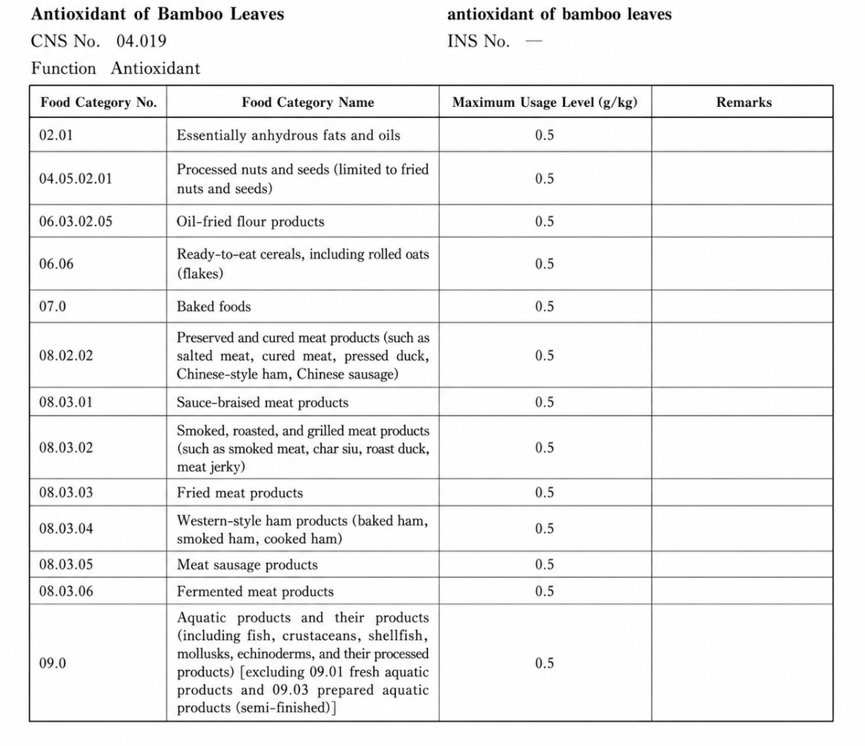
China: Antioxidants of bamboo leaves are included in GB 2760-2024 National Food Safety Standard – Standard for Uses of Food Additives, with CNS No. 04.019. They are approved for use as natural food antioxidants, with clearly specified application categories and maximum usage levels.
Other countries and regions: Research institutions and companies in countries and regions such as the United States, Japan, and South Korea have conducted studies on bamboo leaf flavonoids. A limited number of products have entered the market in fields such as health products and cosmetics under the categories of “natural extracts” or “functional ingredients.”
IV. Safety
Antioxidants of bamboo leaves are natural plant extracts, and bamboo leaves have traditionally been used in China as materials associated with both food and medicinal applications. Their safety has been evaluated through multiple toxicological studies in China and abroad, including acute toxicity, subchronic toxicity, and mutagenicity tests, as well as long-term consumption experience. They have shown no acute toxicity, chronic toxicity, reproductive toxicity, carcinogenicity, teratogenicity, or mutagenicity [12]. At normal usage levels, they can be metabolized and eliminated through normal physiological processes without a risk of accumulation in the body.
Toxicological evaluations have shown that the oral LD50 of antioxidants of bamboo leaves in both male and female rats is greater than 1000 g/kg [12], classifying them as practically non-toxic. The amounts used in food processing are far below the toxicological threshold.
V. Applications and Maximum Usage Levels
According to GB 2760-2024 National Food Safety Standard – Standard for Uses of Food Additives, the application scope and maximum usage levels of antioxidants of bamboo leaves as food antioxidants are as follows:
VI. Precautions
1. Compatibility: The antioxidant activity of antioxidants of bamboo leaves may decrease slightly under strongly alkaline conditions (pH > 9), so they are not recommended for use alone in strongly alkaline food systems. The maximum usage levels specified in the relevant national standards should be strictly followed.
2. Storage conditions: The product should be stored in a tightly sealed container at room temperature in a dry place protected from light. A storage temperature of ≤25°C and relative humidity of ≤65% are recommended. Exposure to moisture, high temperatures, direct sunlight, and rain should be avoided. Antioxidants of bamboo leaves have relatively low hygroscopicity. If slight caking occurs without deterioration, the product can be ground and used normally without affecting its main antioxidant activity. After opening, the product should be used as soon as possible. Any remaining material should be resealed and stored in a dry place to prevent prolonged exposure to oxygen and subsequent oxidative loss of active components.
3. Safety and labeling: The product should be declared on food labels in accordance with applicable regulations to ensure consumers are properly informed. Excessive intake should be avoided, and additional safety evaluation may be required for foods intended for special dietary uses.
Antioxidants of bamboo leaves are natural, green, and multifunctional food antioxidants with distinctive Chinese characteristics. By making use of China’s abundant bamboo resources, they support the comprehensive utilization of forestry resources and align with the development of a more sustainable food industry. They can effectively delay oxidative rancidity, extend food shelf life, and enhance the natural positioning of food products, offering broad application potential in the future development of functional foods.
References
[1]杨丽.竹叶提取物化学成分的研究[D].天津中医药大学,2021.DOI:10.27368/d.cnki.gtzyy.2021.000537.
[2]周朋朋,周勇,吴伟伟,等. 竹叶提取物的活性成分及在食品中的应用前景[J].安徽农业科学,2017,45(03):90-91.DOI:10.13989/j.cnki.0517-6611.2017.03.031.
[3]林丽园,张甄妮,严姝,等. 竹叶提取物的抑菌性分析[J].南方农业,2015,9(36):134-135.DOI:10.19415/j.cnki.1673-890x.2015.36.080.
[4]Jinyan G ,Daozong X ,Jun H , et al. Functional components of bamboo shavings and bamboo leaf extracts and their antioxidant activities in vitro.[J].Journal of medicinal food,2015,18(4):453-9.DOI:10.1089/jmf.2014.3189.
[5]李小芳,冯小强,杨声,等. 不同溶剂的竹叶提取物抗氧化活性研究[J].资源开发与市场,2012,28(10):868-870.
[6]孙立娜,靳烨. 竹叶抗氧化物及其在食品中的应用[J].食品研究与开发,2012,33(09):116-118.
[7]尹利端,王桐,石丽花,等. 竹叶提取物的工业制备与功效研究进展[J].食品工业科技,2012,33(16):383-386.DOI:10.13386/j.issn1002-0306.2012.16.009.
[8]李会丽,刘尊英. 竹叶抗氧化物的功能特性及其在肉类制品中的应用研究进展[J].肉类研究,2012,26(07):36-38.
[9]倪向梅,曹光群. 竹叶提取物的体外抑菌及抗氧化活性的研究[J].天然产物研究与开发,2011,23(04):717-721.DOI:10.16333/j.1001-6880.2011.04.011.
[10]贾洪锋,陈云川,孙俊秀,等. 竹叶提取物的生理活性及其在食品中的应用[J].食品与发酵科技,2010,46(04):25-28.
[11]Park Y ,Lim H . Antioxidant Activities of Bamboo (Sasa Borealis) Leaf Extract according to Extraction Solvent[J].Journal of the Korean Society of Food Science and Nutrition,2009,38(12):1640-1648.
[12]傅剑云,郑云燕,夏勇,等. 竹叶抗氧化物急性和亚慢性毒性研究[J].浙江预防医学,2004,(07):5-7.DOI:10.19485/j.cnki.issn1007-0931.2004.07.003.
Latest Blogs
-
Nov. 03, 2026
[Exhibition Review] L&P Foods Explores New Opportunities in Nutrition at SupplySide Global
-
Nov. 02, 2026
【Sweeteners Series 1】 Sucralose: The “Zero-Calorie Champion” for a Healthier Sweetness
-
Oct. 29, 2026
-
Dec. 23, 2026
Ca-HMB in Active Aging Nutrition: Formulation Considerations for Muscle Health Products
-
Dec. 11, 2026
How to Prevent Rancidity in Fried Snacks and Roasted Nuts During Storage